Showing posts with label Latest news. Show all posts
Digital marketers keep on looking out for new trends emerging every year to tap into the vast unexplored market. If we look at a potential customer, he/she is networking into an array of social channels, through multiple devices and platforms in one or the other way. Businesses try hard to engage and grow consumers through these mediums. Here are a few social media trends expected to make impact this calendar year.
Snapchat:
This app has taken the world by storm, and is a powerful social networking channel for businesses looking to engage the millennial generation. The digitally savvy audience has already started sharing pictures, videos and other media with this app.
The selling point of application for businesses would be the feature where it provides an expiration date to the content you post, which the audience are attracted towards. Such types of custom content, which run only for a defined period of time in the form of teasers, trailers about upcoming products, would surely attract target audience.
Instagram:
The digital society we live in today thrives on visual stimulation, and Instagram provides just that medium to share your thoughts and experiences in the form of images/videos. In fact, this year businesses would re-think their strategy and go this way. To woo more advertisements, Instagram has increased their video advertisement time limit to 30 seconds in 2016.
Pinterest:
We all know what an exciting medium Pinterest is, and while we have just begun to get familiar with buyable pins, it has been publicized that Pinterest is introducing a new feature – ‘Animated Cinematic’ pin. It would allow brands to target a specific person based on his/her interest.
Businesses should start thinking about how they can incorporate these trends into their digital marketing strategies to have a higher probability of success. It is recommended that you perform a feasibility study before you start incorporating these trends in your organization, as you might not need all of them.
These are just some of the 2016 trends; stay connected for more updates in digital marketing, social media marketing and web designing trends in 2016
Some 20,000 children under age 13 get kicked off of Facebook for lying about their age every day.

That came out during testimony by one Facebook’s privacy advisors, Mozelle Thompson, before Australia’s parliamentary cyber-safety committee, according to the Daily Telegraph.

Facebook’s rules require users to be at least 13 years old, but like Thompson said to Parliament, as quoted by the paper:

There are people who lie. There are people who are under 13 [accessing Facebook]. …Facebook removes 20,000 people a day, people who are underage… It’s not perfect.

An Australian member of Parliament suggested that Facebook ought to require teenagers to obtain parental permission to join the site. We applaud that general idea but in practice wonder how a company could possibly enforce something like that.

Facebook plans to hire an Australian-based policy person who would deal with this issue among others, effectively mirroring what the Washington D.C. staff do for the social network in the capitol of the U.S. But policing underage users of the site would have to compete for that staffer’s attention with a host of other concerns.

Readers, what do you think Facebook should do about the large number of underage users on the site?

Keep visiting
With the internet becoming a massive revolution and almost every transaction ranging from financial to signing of contracts conducted online, protecting confidential information has become very important.

Cyber crime is costing businesses millions of dollars

Large companies are known to implement stringent data security policies. Despite this, hackers have found loopholes in the system – Target, iCloud, Home Depot being examples of recent security breaches that made headlines. Small businesses can also be a target to hackers if they are not careful. Nothing is stopping the same hackers from targeting a small or medium-sized business.
An IBM-Ponemon Institute Study 2015 says that “On average, a data breach has been studied to cost $6.53 million to a company.” These estimates do not cover losses to brand image and lost business opportunities. Small businesses generally lack manpower and the budget to protect themselves from hackers. According to information from Towergate, a leading insurance intermediary, the most common security risks involved in a small business set up include:

#1 Casual Stance towards Data Security

Most SMBs do not understand or realize the importance of data security. 82% of the companies believe that they aren’t a target for cyber attacks as they don’t have anything worth stealing. 32% of these companies also believe that a day’s downtime due to an attack would not significantly affect their revenue. Malicious or criminal attacks are the leading causes of data breach and also the most expensive. These companies don’t invest in fully protecting themselves and end up being vulnerable to attacks.
Solution: Start by developing a basic data security plan that not only covers data protection but also includes an action plan in case of a breach. Patch all your systems and segment your networks, secure your browsers, mandate data encryption and use an email encryption solution to protect your data.
Chip Brooks, Owner of ZixMailEncryption says, “It’s very prudent for every business to use an email encryption solution to protect their data. We’ve seen that several small businesses are not even aware of a solution like that.”

#2 No strong data security policies

A small business needs to reflect upon its own policies to see whether data security is imbibed into their work culture. Without a security policy, most businesses end up vulnerable to attacks and most of them fail to contain breaches due to non-existent post-breach policies.
Solution: Establish a data storage policy that becomes the rule book to be followed by all employees. The policy should cover data access structure within a company. Maintaining audit trails ensure accountability of who has accessed what kind of data and when. Businesses also need to understand that larger data sets increase their risk of a cyber attack. It is very important to have a policy that would ensure prompt deletion of old or unnecessary data. Limiting social networking platforms is also a key step in protecting company data.

#3 Lack of Data backing systems

62% of small businesses fail to routinely back up their data. The reasons could either be due to a lack of infrastructure or failure to conduct regular data backups. Regardless of the size of your business, data back-ups are a must.
Solution: Automate the entire process of backing up data. Apart from physical drives to store data, make use of trusted cloud services and other off-site servers to ensure data security even in cases of natural disasters, fire or theft. If companies cannot hire an IT team full time then outsourcing the service, hiring consultants or use of trusted third party systems could be an option.

#4 Internal Threats

Cyber attacks due to an employee could be intentional or just negligence. When it comes to corporate espionage all employees, whether it’s the CEO of the company or your hard-working developer, need to be carefully monitored. Apart from planned attacks, employee negligence is also costing companies. Close to 77% of employees leave their computers unattended, fall prey to spam links or end up installing malicious software on their systems. And it comes as no surprise that 95% of all security incidents involve human error.
Solution: Close monitoring of employees would include checking for unusual behavior, limiting access to critical business data. Reducing security breaches due to human error should be done by educating and training  employees about data security. Sean Park, Managing Partner of Sean Park Law says, “Data security is an important part of our operations. As a law firm, client confidentiality is of utmost importance. We take every step to ensure that we are up-to-date with our security policies, such as automatic encryption for online client communication.”

#5 Boon and bane of mobility

With more and more companies adopting the Bring-Your-Own-Device (BYOD) system, the access points for data is also increasing. 56% of employees are known to store critical business data on their mobile devices like laptops, smart phones etc. Without proper data security measures in place, these devices are soft targets for cyber attacks.
Solution: Set up a security checklist for all mobile devices. These devices should comply with your data security policies. Encryption of all devices is a must. WiFi networks are known to permit interceptions of data, avoid using unprotected WiFi networks and apply LAN within company walls if possible.

Conclusion

In an era where data is money and cyber crime is a real threat, small businesses need to understand that the cost of data breaches is higher than the cost of implementing security systems. It’s important to put some time and effort into ensuring the safety of your data.

A group of former Skype technologists, backed by the co-founder of the messaging platform, has introduced a new version of its own messaging service that promises end-to-end encryption for all conversations, including by video.

Wire, a 50-person startup mostly made up of engineers, is stepping into a global political debate over encryption that pits privacy against security advocates, epitomized by the standoff between the US government and Apple.

The company said on Thursday it was adding video calling to a package of private communications services that go beyond existing messaging providers.

Rivals such as Facebook's Messenger and WhatsApp, Telegram, Threema and Signal offer encryption on only parts of a message's journey or for a limited set of services, it said.

Wire, which is based in Switzerland and stores user communications on its own computers, delivers privacy protections that are always on, even when callers use multiple devices, such as a phone or desktop PC simultaneously.

This comprehensive approach poses fresh challenges to law enforcers, who often seek to exploit gaps in encryption in criminal or security investigations.

"We believe Wire is unique in the industry with always-on encryption for all conversation(s), in groups or 1:1, with simultaneous support for multiple devices," Wire chief technology officer Alan Duric said in a statement.

"Everything is end-to-end encrypted: That means voice and video calls, texts, pictures, graphics -- all the content you can send," Wire executive chairman Janus Friis told Reuters.

The Danish entrepreneur was a co-founder of Skype, first released in 2003, which was later sold to a series of owners and is now a unit of Microsoft Corp.

Wire launched the first version of its self-titled communications app late in 2014 to limited notice because it offered encrypted calling and text services similar to a dozen other apps, distinguished mainly by crystal-clear voice quality.


The app relies on standard, open-source encryption techniques, which allows outside technical experts to evaluate the security of its products rather than relying on trust.


Wire receives financial backing from Iconical, a group of designers, engineers and executives that act as alternative to traditional venture capital investors. Friis invests in Wire as part of Iconical.


It has not disclosed how much funding it has received. A key selling point for Wire is that it protects users from advertising. Like many start-ups in this area, it is seeking to grow quickly and discover a sustainable business model later.
Samsung may launch its new flagship smartphones, the Galaxy S7 and S7 Edge, in India today. The phone was unveiled a few weeks ago at MWC.
Both come with similar specifications, except for the display. While the Galaxy S7 comes with a 5.2-inch QHD display, the S7 Edge has a 5.5-inch curved QHD display.
The phone comes in two variants, one powered by Qualcomm Snapdragon 820 and the other with Exynos 8890. It is not known which variant will be launched in India. Both phones come with a 12MP dual-pixel sensor camera on the rear. Samsung claims that this larger pixel lets in 56% more light as compared to its older sensor, also aided by the f/1.7 aperture lens. There is a 5MP wide-angle front-facing camera, as well. The Samsung Galaxy S7 is equipped with a 3000mAh battery, while the S7 Edge has a 3600mAh battery pack. The devices come with fingerprint sensors and IP68-certified water and dust resistance, which allows the phones to remain submerged in 1.5 meters of water for up to 30 minutes.
Oppo since last week has been teasing the Oppo R9 and the Oppo R9 Plus camera-focused smartphones in China. It has also been posting teasers on its Weibo account touting the handsets' VOOC fast charging. However, it has finally posted an image confirming when it will be launching the duo.
The Chinese tech firm, as expected before, will be launching its Oppo R9 and the Oppo R9 Plus on March 17 this year. The image, besides the date, mentions "2016 New Product Launch Event" along with a "9" numerical indicating the Oppo R9 handsets. It is likely that the duo will launch in China only but will eventually reach other markets. The image was posted on the company's Weibo account.


The two smartphones last week purportedly passed Tenaa the Chinese telecommunications certification authority revealing images and specifications.
The dual-SIM supporting Oppo R9 as per the listing runs Android 5.1 Lollipop out-of-the-box and features a 5.5-inch ful-HD (1080x1920 pixels) resolution Amoled display. It is powered by an octa-core processor clocked at 1.95GHz, which clearly is not the Qualcomm Snapdragon 820 processor that the smartphone was previously tipped to sport, as the Snapdragon 820 is a quad-core offering.
The smartphone also houses 4GB of RAM alongside 32GB inbuilt storage, which can be expanded via a microSD card (up to 128GB). Other features mentioned are 4G LTE support and 2850mAh battery. Both the front-facing and rear camera are seen sporting 16-megapixel sensors, indicating it to be a camera-focussed smartphone like rumoured previously. It measures 151.8x74.3x6.5mm and weighs 145 grams.

As for the dual-SIM Oppo R9 Plus, the smartphone is seen with a larger 6-inch full-HD Amoled display, an octa-core processor clocked at 1.8GHz, 64GB of expandable storage, and a 4120mAh battery. The RAM and camera specifications stay the same as its smaller sibling. The smartphone runs Android 5.0 Lollipop out-of-the-box, measures 163x80.8x7.4mm, and weighs 185 grams.

Snapchat has hit 8 billion video views per day, said CEO Evan Spiegel, putting the ephemeral messaging sharing app on par with competitor Facebook, which hit that 8-billion figure back in November.
In a keynote speech at the Morgan Stanley Technology, Media and Telecom Conference in San Francisco this week, Spiegel said that the Snapchat has over 100 million daily visitors who log an average of 30 minutes on the app per day. Spiegel also said that 41 percent of the 18- to 34-year-olds in the United States are on the app every day, with more than half of new users joining the app over 25.
Related: Scammer Gains Access to Snapchat Payroll Data After Posing as CEO
As of last month, the company was valued at $16 billion. February also saw Snapchat make several moves with an emphasis on advertising. The company made a deal with Viacom that allows the media company to sell ads on Snapchat's behalf and it started using Nielsen Digital Ad Ratings to measure how many users the service is reaching through its mobile advertisements.
They may not be as sexy as the celebrities Facebook is reportedly trying to woo, but small and medium businesses are still an important group of customers for the social network.
On Wednesday, the Menlo Park, Calif., company unveiled a new tool that lets businesses make a short introductory video about their company. Dubbed “Your Business Story,” the video tool lets businesses create essentially a photo slide show to which they can add some music from a library and a short text description of “what they are in the business of” doing.
With video’s meteoric rise in importance, it’s not surprising that Facebook is coming up with extra ways to not only get more video uploaded onto its network, but also to get users to watch more of it. As Fortune previously reported, Facebook is on a ferocious quest to become a serious competitor to Google’s video network, YouTube. Not surprisingly, YouTube also lets users create similar videos out of photo slide shows.
So far it’s not doing too shabby. During an earnings call in November, the company revealed its users were now watching 8 billion videos per day, twice the amount they were watching only a few months prior in April. And as Facebook VP of small businesses Dan Levy told Fortune in an interview, more than 1.5 million small businesses upload videos on Facebook every month.
With that said, the 8 billion metric should be taken with a grain of salt, especially if you ask YouTube’s CEO, Susan Wojcicki. At Fortune’s Brainstorm Tech conference in Aspen, Colo., last summer, Wojcicki challenged the validity of the metric because Facebook automatically plays videos in a user’s feed instead of letting them press play if they want to.
But even so, it’s hard not to see why Facebook would invest in its community of small businesses. Today there are more than 50 million small businesses with profiles on Facebook, and 3 million of them have spent money on ads on the network, up by 50 percent over the last year, according to Levy.
But let’s not forget that Facebook is fundamentally a business, and making money is a high priority. Levy declined to share how much small businesses contributed to the company’s $5.6 billion in ad revenue last quarter, but it’s safe to say that it’s not most of it considering what brands like Coco-Cola are likely spending on the network.
So why are small businesses so important to Facebook? The answer is of course, better advertising -- what Facebook does best.
“Ads you see will be more diverse, and more targeted to you,” said Levy when asked why Facebook is investing so much into growing its small-business customer base. Small businesses may not contribute the most revenue, but they do make up the vast majority of Facebook’s advertisers, Levy confirmed.
The more brands that are buying ads on Facebook, the more likely it will be to serve “useful” ads to its users. Or at least that’s what Facebook is banking on.   
The U.S. Commerce Department is set to place export restrictions on Chinese telecoms equipment maker ZTE Corp (000063.SZ) for alleged violations of U.S. export controls on Iran, according to documents seen by Reuters.
The restrictions will make it difficult for the company to acquire U.S. products by requiring ZTE's suppliers to apply for an export license before shipping any American-made equipment or parts to ZTE. According to a Commerce Department notice that will be published next week in the U.S. Federal Register, the license applications generally will be denied.
The restrictions will take effect Tuesday, Reuters has learned, and apply to any company worldwide that wants to ship American-made products to ZTE Corp in China. Those companies are not the target of the export curbs on ZTE.
"This is a significant new burden on trade with ZTE," a senior official at the Commerce Department told Reuters. The official declined to comment on whether the U.S. government might take further action against ZTE.
The company can appeal against the action.
ZTE, based in the southern Chinese boomtown of Shenzhen, said in a statement on Sunday that it was aware of media reports on U.S. export restrictions.
"ZTE is highly concerned about recent media reports relating to a U.S. Department of Commerce investigation," the company said. "ZTE has been working with associated U.S. government departments on investigations since 2012 and maintains constant communication with associated departments and is committed to fully address and resolve any concerns."
Trade in shares in ZTE, which also sells consumer electronic devices such as smartphones in the United States, was suspended on Monday in Hong Kong and Shenzhen. The company did not offer an explanation.
"We believe the restrictions, if implemented, will cause significant supply problems to ZTE," Jefferies analyst Cynthia Meng wrote in a note, adding that ZTE has major trading relationships with several U.S. companies including Qualcomm (QCOM.O), Microsoft (MSFT.O) and IBM (IBM.N).
Telecoms equipment and terminal businesses combined account for 80 percent of ZTE's total revenue of 2015, Meng said. The company's revenue for last year was expected to rise 23.8 percent to a record high of 100.8 billion yuan ($15.47 billion), preliminary results showed.

ALLEGED VIOLATIONS
The Commerce Department investigated ZTE for alleged export-control violations following reports by Reuters in 2012 that the company had signed contracts to ship millions of dollars worth of hardware and software from some of America's best-known technology companies to Iran's largest telecoms carrier, Telecommunication Co of Iran (TCI), and a unit of the consortium that controls it.
The U.S. companies, which included Microsoft Corp (MSFT.O), IBM (IBM.N), Oracle Corp (ORCL.N) and Dell Inc [DI.UL], have all said they were not aware of the Iranian contracts. It is not clear if any of the companies still do business with ZTE.
Washington has long banned the sale of United States-made technology products to Iran. The Commerce Department's investigation focused on whether ZTE had acquired American products through front companies and then shipped them to Iran in violation of U.S. sanctions.
Commerce Department investigators obtained internal ZTE documents - some of which had been marked by the company as "Top Secret" - outlining an alleged sanctions-busting scheme. Reuters reviewed some of the documents.
The senior Commerce Department official declined to comment on whether ZTE had implemented that scheme.
The ZTE statement did not provide comment relating to the documents.
The day after the first Reuters article was published in March 2012, a ZTE spokesman said the company would "curtail" its business in Iran. The company later issued a statement saying: "ZTE no longer seeks new customers in Iran and limits business activities with existing customers."

BUSINESS IMPACT
What effect the new export restrictions will have on ZTE's global business is not clear.
One undated internal ZTE document obtained by Commerce Department investigators and reviewed by Reuters states: "Our company has many technologies and components that came from suppliers in the U.S ... Lots of chips or software used in the products of our company are from U.S. suppliers."
One of ZTE's websites also states that several leading U.S. technology companies, including Microsoft, Intel Corp (INTC.O), IBM and Honeywell International Inc (HON.N), are "key strategic partners of ZTE". The terms of the partnerships are not described.
A spokeswoman for Microsoft said the company had a licensing agreement with ZTE but could not confirm if the Chinese company purchases other products, such as software. The other U.S. companies did not respond immediately to requests comment.
The undated internal ZTE document also describes a proposal overseen by the company's legal department that describes ways to export American products subject to U.S. sanctions by using shell companies to avoid getting caught.
"The biggest advantage" of one method is that it will make it "harder for the U.S. government to trace it or investigate the real flow of the controlled commodities", the document states.
In its planned action against ZTE, the Commerce Department cites the proposal, stating that the company "planned and organized a scheme to establish, control and use a series of 'detached' companies to illicitly re-export controlled items to Iran in violation of U.S. export control laws". It is not clear if the alleged scheme was implemented.

'TOP SECRET'
Another internal ZTE document from August 2011 that discusses "U.S. export control risks" facing the company allegedly was signed by several top ZTE officials, including Shi Lirong, its president.
The document, marked by the company "Top Secret" and "No spreading abroad without permission of ZTE", begins "Dear company leaders".
It states that ZTE "has ongoing projects in all five major embargoed countries - Iran, Sudan, North Korea, Syria and Cuba", adding that "all of these projects depend on U.S.-procured items to some extent, so export control obstacles have arisen".
The document goes on to cite "other risks" to ZTE, including its operations in the United States.
"R&D employees at the U.S. Research Centers often travel between China and the U.S., carrying R&D data," it states, in an apparent reference to research and development. "This already severely violates the law."
The document does not specify what law may have been violated.
The company "needs to take preventative measures immediately, otherwise will face the risk of being investigated anytime", the document states.
The document also states that ZTE's Iran project "can potentially put us at risk of being put on the Blacklist by the U.S.," and that such an eventuality could leave the company facing "the risk of losing the supply chain of U.S. products".
ZTE Corp is one of the world's largest telecoms equipment makers with operations in 160 countries, according to its website. It also is a major manufacturer of mobile handsets. Founded in 1985, its shares trade on both the Hong Kong and Shenzhen stock markets.

Besides ZTE, the export curbs will apply to two of its Chinese affiliates, ZTE Kangxun Telecommunications Ltd and Beijing 8-Star, and an Iranian company, ZTE Parsian.
Apple Inc customers were targeted by hackers over the weekend in the first campaign against Macintosh computers using a pernicious type of software known as ransomware, researchers with Palo Alto Networks Inc told Reuters on Sunday.
Ransomware, one of the fastest-growing types of cyber threats, encrypts data on infected machines, then typically asks users to pay ransoms in hard-to-trace digital currencies to get an electronic key so they can retrieve their data.
Security experts estimate that ransoms total hundreds of millions of dollars a year from such cyber criminals, who typically target users of Microsoft Corp's Windows operating system.
Palo Alto Threat Intelligence Director Ryan Olson said the "KeRanger" malware, which appeared on Friday, was the first functioning ransomware attacking Apple's Mac computers.
"This is the first one in the wild that is definitely functional, encrypts your files and seeks a ransom," Olson said in a telephone interview.
Hackers infected Macs through a tainted copy of a popular program known as Transmission, which is used to transfer data through the BitTorrent peer-to-peer file sharing network, Palo Alto said on a blog posted on Sunday afternoon.
When users downloaded version 2.90 of Transmission, which was released on Friday, their Macs were infected with the ransomware, the blog said.
An Apple representative said the company had taken steps over the weekend to prevent further infections by revoking a digital certificate that enabled the rogue software to install on Macs. The representative declined to provide other details.
Transmission responded by removing the malicious version of its software from its website, www.transmissionbt.com. On Sunday it released a version that its website said automatically removes the ransomware from infected Macs.
The website advised Transmission users to immediately install the new update, version 2.92, if they suspected they might be infected.
Palo Alto said on its blog that KeRanger is programmed to stay quiet for three days after infecting a computer, then connect to the attacker's server and start encrypting files so they cannot be accessed.
After encryption is completed, KeRanger demands a ransom of 1 bitcoin, or about $400, the blog said.bit.
Olson, the Palo Alto threat intelligence director, said that the victims whose machines were compromised but not cleaned up could start losing access to data on Monday, which is three days after the virus was loaded onto Transmission's site.

Representatives with Transmission could not be reached for comment.
The Big Five software exporters - TCS, Infosys, Wipro, HCL and Cognizant - together added net 24 per cent fewer employees in 2015 at 77,265, thanks to their automation drive.
The massive plunge in net additions was led by the US-listed, Chennai-based Cognizant Technologies (down 74.6 per cent from 2014) and HCL Technologies (down 71 per cent) which have been very keenly focusing on improving utilisation rates through automation, says a report by city-based brokerage Centrum Broking.

"Software vendors across the pack are focusing on automation and we believe that FY16 will be an inflection point.
"We see rapid scope for vendors improving efficiencies through expanding automation across multiple projects and service lines owing to sheer competitive pressure.
"The result is that these five companies have net added 24 per cent fewer employees in 2015," the report notes.
This came at a time when these companies' combined dollar revenue grew 9.8 per cent.
The report also notes that the drop would have been much higher had it not been for Infosys, which made a whopping 111.4 per cent net addition at 23,745 in the year.
But this is understandable due to the massive attrition the company was facing in the past many years.
Against the hiring spree by Infosys, market leader TCS saw its net additions dip by 6.6 per cent at 26,066.
While Cognizant saw a massive 74.
6 per cent plunge in net employee additions at 10,200, HCL saw the same dipping by 71 per cent to 3,456 in 2015.
At the end of December 2015, these five companies had a headcount of 1.34 million.
These companies are vocal about improving delivery efficiency and revenue productivity using automation as their revenue per reported employee stands at USD 45,000-52,000 per year, which is lower than their global peers.
Riding on automation, Infosys has given a guidance to take this to USD 80,000 per annum by 2020, says the report.
Even though each of these companies have their own automation platforms -- Infosys has Infosys Automation Platform, Wipro has Holmes, HCL Tech operates Dry Ice, and TCS has Ignio -- their focus on this line of business has seen emergence of many independent players offering automation services or virtual engineers.
Companies offering such services include IPSoft, Blue Prism, Genfour and Automation Anywhere.
The report notes that though Infosys and Wipro are the most vocal on "freeing up resources" across their IMS/BPO service lines, they have shown relatively higher net employee addition in 2015.
The report also notes that FY16 could be a year of transition in the sector on the automation front and tangible benefits can flow down from FY17 as vendors are focusing on re-training the freed up resources from the traditional service lines.
On the revenue side, the report predicts that the focus on automation will ease pressure on wage hikes.
"With automation enabling improved delivery efficiency and productivity, the IT sector could be facing a scenario of lower net additions in FY17/FY18," it said.
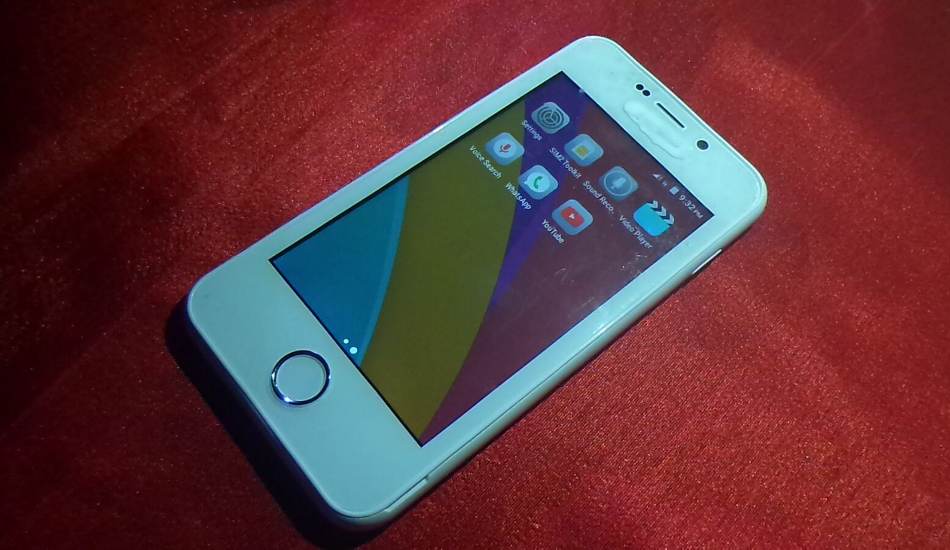
Social media is buzzing with news and discussions about the recently launched Freedom 251 smartphone that has been introduced in India for a really and literally unbelievable price of INR 251 ($4)! A launch event for the phone was conducted, which indicated that it’s not a scam, though some government officials including Defence Minister Shri Manohar Parrikar (Guest of Honor) did not show up at the event.


Even the launch event did not look like a launch event, and maybe this is because the company is still not experienced, Freedom 251 being their second smartphone. But at least the launch event shouldn’t have gone wrong, which raises a lot of questions in our minds. Clearly speaking, we think that Ringing Bells’ Freedom 251 is a scam and people shouldn’t fall for it. Here are 4 strong reasons why you should not buy Freedom 251 smartphone.

Freedom 251 Buy or Not to Buy?

Disclaimer: Before we go ahead and start without our list, we would like to tell you that these are our liberal thoughts that we believe in currently. We are not confirming or guaranteeing in any way that this is a scam unless it is completely proved with more proofs. Our only intention is to make our readers aware of all the possibilities that we can make out from the information currently available at hand. We have referred PhoneRadar for information.

1. The Product Isn’t Subsidized

Freedom 251 hasn’t received any subsidy from the government, and this has been confirmed by the President of Ringing Bells himself. The company says that most of the costs include the passing on of the 13.8% duty protection for selling a Make in India product. However, some researching and calculation tells us that the minimum cost for making the Freedom 251 with those specs should be around INR 2000-2500. The company is only getting a discount of a couple of percent through the Make in India campaign, which is actually not enough for covering the production expenses. So there’s a really big gap between the cost of production of the smartphone and its INR 251 price tag.

2. “Make in India” But Made in China!

While the company claims on its website that their Freedom 251 smartphone is a part of the Make in India campaign, we believe otherwise. First of all, no one has ever heard of Ringing Bells, and secondly, the Freedom 251 resembles the Adcom Ikon 4 smartphone that is imported from China to be sold in India by Adcom, an India smartphone vendor. One look at the Ikon 4 and you would say that Freedom 251 is the exact same phone, which conflicts with the fact that it is a Make in India product. Also, no one knows where the Ringing Bells manufacturing plant is, or whether or not they even have one.

3. Copyright Infringement Issues

Let’s say for a moment that this is not a scam and that Freedom 251 is a real smartphone available for INR 251. However, Ringing Bells is clearly violating copyright laws by directly lifting off software elements from Apple’s iOS such as calculator, browser, messages, camera, clock, etc. Apart from the software, even the circular home button on the Freedom 251 looks like the Touch ID/Home button on the iPhone 6/6s.


4. Freedom 251 is Not BIS Certified

The Bureau of Indian Standards had introduced a rule in 2015 that makes it compulsory for smartphone manufacturers to get BIS certification for their products before they can start selling them in India. And for your information, the Freedom 251 smartphone does not carry a BIS certification, which places it in an illegal zone according to us. Ringing Bells itself claims that the Freedom 251 will start shipping in June and they will get the BIS certification by then as the procedure is a lengthy one. However, it is still not legal to start selling the phone before getting it certified.

All the above information points towards a possibility that Freedom 251 could be a scam and you should refrain from buying this handset as of now. We hope the government gets deep into the matter and investigates the ins and outs of Ringing Bells’ business so that we clear idea of what’s true and what’s not. Till then, it would not be safe to buy Freedom 251 smartphone.

You might have heard recently in your social media timeline that a smartphone priced at Rs 251 is launched in India. Well, that is hard to believe, but as far as we people are led to believe it is a greenlit since company conducted a launch event. But it didn’t go as promised, as the Guest of Honor, the Defence Minister, Shri Manohar Parrikar and few other government officials didn’t show up for the event. Moreover, we would say the launch event didn’t felt like an actual smartphone launch event, trust us as we say because we have been to a lot of events.


Sure, company is inexperienced, since it’s their second handset only, but they could have don’t it properly. Instead it’s letting us believe that the Freedom 251 smartphone from the Ringing Bells is just another scam. As the Smart 101 handset, which is what claimed by some users online posting feedback on company’s business listing. Let’s go down this road again as we have several times and let us convince you why you shouldn’t buy the cheapest 3G smartphone in the world.

5.Is it a Subsidized Product?

The information that was able to gather from the company officials at launch says that it isn’t a government subsidized product. The President of Ringing Bells has clarified that there is no subsidy provided by the government for the Freedom 251 smartphone. When asked how you are going to achieve this feat of launching a product at Rs 251, he responded with that company has broken down costs, most of which includes passing on the 13.8% duty protection for selling a Make in India product to a customer. According to the calculations after researching, we came to a number at Rs 2300-2500, which would be a minimum cost bearings for a phone with specifications like Freedom 251. Now the company is admitting that there is no subsidy provided by the government, but they’re rather getting a Make in India discount of a couple percent, which in theory would not cover the expenses of the production. There is just a significant gap between the 251 Rs price tag and the costs to make a smartphone with such specifications.

6.“Make in India” via China

The company claimed on their website that the Freedom 251 is a part of Make in India campaign. While are happy to see this initiative taking serious steps with big corporations like Samsung, Gionee, Vivo and Xiaomi are couples to name. But a company no one’s ever heard of announces a smartphone with such dirt cheap pricing, all out of the water, with no concrete reports is just to skeptical, wouldn’t you say. Moreover, a wholly highlighting issue came in when we find out that Freedom 251 is a Rebranded Adcom Ikon 4 smartphone. If you didn’t know, Adcom is an Indian Smartphone vendor, who imports handset from China and sell it in the country, as many companies like Micromax and Karbonn does. The Adcom has been in the news recently where company inked an agreement with Zopo Mobiles, an international mobile manufacturer from China. Since we have established that Freedom 251 smartphone is really a rebranded version of the Ikon 4 smartphone Adcom, then how can it be a Make in India product, if it’s imported from Chinese manufacturing plant. Moreover, the Noida-based Ringing Bells haven’t shared any plans that where they have set up the manufacturing unit in the country, or if they haven’t when would they would do so. In the name of Make in India, the company might just be target innocent citizens who believe that it’s a real product. But what if it’s not, have you thought about it!


7.Copyright Infringement

Okay, even if it was true somehow that it isn’t a scam, then how would you justify the copyright infringement that Ringing Bells is completely violating by using the software icons lifted from the iOS. The dialer app, browser, calculator, camera, clock ad messages applications are copied from iOS. For those who are not aware, Apple iPhone runs on the iOS mobile platform, and the icons that are being used on the Freedom 251 are clearly in violation of the copyright infringement. Meanwhile, we are at it; the software is not the only thing that is apparently copied from the Apple iPhone. If you’re not familiar with the iPhone, then let us tell you that the circular Touch ID at the bottom of the cheapest 3G smartphone looks like iPhone 6/6s.

8.Different Photos, Same Device

What’s more disconcerting is that founders of Ringing Bells think this as a joke? Why do we say that? Well, it’s because the smartphone doesn’t look anything like the images posted on the Freedom251.com. Do You want to hear more? After going through the order page, the device image completely changes. Also according to the images we had published in our earlier article (Posted above as well), you can see it’s different. Now how is that possible? One device, two entirely different images. As if that wasn’t enough, you could order minus 1 unit of the device at minus Rs 291 (Shipping included) as shared online. Some of the users even claimed that site is accepting up to 99 units. We also witnessed that case, although, now the booking is closed for around 24 hours. It may be a technical flaw, but if it is any real, wouldn’t it make sense to use existing e-commerce websites (like Flipkart and Snapdeal) that could handle such transactions with much ease. Or maybe they couldn’t because what this all is a big fat scam, luring people to spend money.

9.NO BIS Certifications

As of last year, companies launching products in the India need to file for BIS certification before launching any product in the country. What is BIS Certification and why is that important? Well, as of last year, the Bureau of Indian Standards has made mandatory for smartphone manufacturing companies in India or outside to launch a product need to go through BIS certification procedure if it wants to be sold in the country. The Department of Electronics and Information Technology introduced a compulsory certification requirement in 2012, which has been then going to apply on various electronics equipment since then including tablets and as of last year, the smartphones as well. Now wouldn’t it be illegal to sell a product with no BIS certification? Well, that would be true. Even, the Ringing Bells claims that their product would be shipped sometime in June (by then they can get certification as it’s a long procedure), it doesn’t give them right to start selling product right now.
After going through all above points, we think it isn’t a wisest of the decision to buy this handset. Well, if you’re just curious to know how it would turn out, in the end, you’re most welcome, but we recommend not buying this smartphone, as it is highly likely that it might be a scam. A big fat scam. Check out few more concerns that we have risen in the below articles about. Stay Tuned on our site to know latest about the Freedom 251 smartphone.
A Google balloon, part of the company's high-speed internet service known as "Project Loon", crashed in a Sri Lankan tea plantation during its maiden test flight, local police said Thursday.

Villages found the deflated balloon with its electronic equipment in the island's central tea-growing region of Gampola on Wednesday night, an officer told AFP.

"Tea plantation workers found it crashed in the plantation. They picked up the pieces and brought it to the station," the officer, who is not authorized to speak with media, told AFP by phone.

However Sri Lanka's Information and Communication Technology Agency, which is coordinating the tests with Google, described the landing as controlled and scheduled.

"Google loon balloon safely landed under standard operating procedures in #lka as a part of the test," ICTA chief Muhunthan Canagey said on Twitter.

The ICTA declined to comment to AFP on details of the landing which had not been previously announced.

The first of three Google balloons entered Sri Lankan air space on Monday after being launched from South America. The launch is part of a planned joint venture between the US internet giant and Colombo to deliver high-speed internet access powered by helium-filled balloons.

The government announced earlier this month it would take a 25% stake in the joint venture with Google. Sri Lanka is not investing any capital, but will take the stake in return for allocating spectrum for the project.

A further 10% of the venture would be offered to existing telephone service providers on the island. It promises to extend coverage and cheaper rates for data services.


The balloons, once in the stratosphere, will be twice as high as commercial airliners and move with the wind using algorithms that tell them where to go. Google has said the balloons will have a lifespan of about 180 days, but can be recycled.

Less than one quarter of Sri Lanka's more than 20 million-strong population has regular access to the internet.

Sri Lanka, the first country in South Asia to introduce mobile phones in 1989, was also the first in the region to unveil a 4G network two years ago. 
Lack of popular and memorable domain names such as dot-com is restricting internet growth, say scientists who suggest that new domains dubbed as 'not-coms' could expand the availability of virtual space for users.

As the digital age dawned, pioneers successfully snapped up broad swathes of easy to remember domain names, such as nouns, places and their combinations -- claiming valuable 'virtual real estate' under the top level domains such as dot-com and so on.

Now, the first research to try and define current demand for internet domain names suggests that the drying up of intuitive and familiar word combinations has seen domain registration drop far below the expected appetite, given the extent to which we now live online, with new entrepreneurs struggling to find their slice of virtual space.

The study estimates that the lack of available high quality domains featuring popular names, locations and things could be stifling as much as a further 25% of the total current registered domains.

With the total standing at around 294 million last year, this could mean over 73 million potential domains stymied due to an inability to register relevant word combinations likely to drive traffic for personal or professional purposes.

However, as the Internet Corporation for Assigned Names and Numbers (ICANN) has begun to roll out the option to issue brand new top-level domains for almost any word, whether it is dot-hotel or dot-books -- dubbed the 'not-coms' -- the research suggests there is substantial untapped demand that could fuel additional growth in the domain registrations.

"Cyberspace is no different from traditional cities, at least in economic terms. In a basic city model, you have a business district to which all residents commute, and property value is determined by proximity to that hub," said Thies Lindenthal from the University of Cambridge.

"A virtual commute is about the ease with which a domain name is remembered and the time it takes to type. The snappier and more recognisable a domain, the more it is going to be worth," Lindenthal said.

Since 2007, annual additions to the domain stock began to lag, while between 2006 and 2012 re-sale prices of domain names already registered rose 63% -- indicating a demand for virtual 'locations' outpacing the supply of available names, with competition driving up prices.

Looking at just dot-coms, Lindenthal compared existing registrations with census data for popular family names in US.

He found that more prevalent the family name, lower the number of domains featuring that name per head of population.

Moreover, a one per cent increase in a surname pushes up domains featuring that name by only 0.74% -- suggesting a gap between likely demand and current domain registration.

Lindenthal also explored domain registration featuring city names compared to size of the population, and found a similar gap between expected demand and current domains.

The study was published in the Journal of Real Estate Finance and Economics.
WhatsApp recently joined the 1-billion users club. The Facebook-owned WhatsApp has now become almost the de facto mode of communication in many countries around the globe. The regular updates the app gets has gone a long way in bolstering its user base.

The popular instant messaging app has received a slew of new features in the past few months. Here's a glance at 6 such cool features you should know about.

Document sharingA new WhatsApp update has added the document sharing feature on Android smartphones. The document sharing feature, so far, allows users to only share PDF files. This means that there is no support for .doc, .xls and other commonly used file formats as of now; there is also no official word on when the company will start supporting these.

In order to share files, users need to tap the attachment icon on the top right of the screen in a chat window and select the 'Document' option. This opens a list of PDF files stored in the system, but the navigation does not let you open specific folders.

Google Drive, Dropbox, iCloud Drive integration in iOSWhatsApp has released an update for iPhones that adds new features like sending files from Google Drive and Dropbox as well as lets users zoom in on videos as they play.

One big feature of this update (v 2.12.14) is the integration of iCloud Drive, Google Drive, DropBox, OneDrive etc to send files to other contacts. This means that users can send photos and videos stored in cloud storage services directly from WhatsApp. However, other files stored in the cloud, like Excel sheets or Word documents, still cannot be sent via WhatsApp.

Group member limit increased from 100 to 256WhatsApp recently increased the number of users one can have in a group to 256. This number previously was restricted to 100. The update is update is available to both iOS and Android app users.

Shared link, history tab
Every WhatsApp conversation thread has a media screen that aggregates all our content such as videos, links and images, which have been sent and received by a user. A new update gives users a quick glance at all these media and text exchanged. It brings a shared links history tab that contains all the shared links sent and received by the user arranged in a reverse chronological order. The link in the tab shows the media at the top and messages at the bottom.

Tapping the preview in the upper part of the screen quickly opens the link in the browser, while tapping at the bottom leads the user to the message that he/she can share, delete or star directly from here.

Pinch to zoom videos
This one is for iOS users. With the new update iOS users can 'pinch to zoom' on videos. This means users can zoom on a video while it is playing in WhatsApp.

Become a WhatsApp 'tester'

This is the best way to become a WhatsApp pro. WhatsApp recently launched a beta tester programme. Once signed, as a tester, you will receive an update that includes a testing version of the WhatsApp Messenger app. However, as with all beta versions, these features too may be unstable or have a few bugs.

Keep starred messages while clearing chat

This feature gives you more flexibility while deleting your chats. So far, Android users have the option to delete messages older than 30 days or over 6 months. However, often felt if you could save some of these. You have the option now: Users can keep starred messages while clearing chats. This version is so far in beta mode. 
Global e-commerce giant Amazon has decided to set up its second largest global delivery centre outside the US in Hyderabad, which could attract a large portion of its proposed investments of $2 billion into India.


The move comes a year after the Seattle-based online marketplace firm's decision to build one of its largest Indian fulfilment centre (warehouse) over an area of 2,80,000 sq ft near Hyderabad.


The development also comes close on the heels of Apple choosing Hyderabad to set up its largest technology development centre outside the US and Google announcing to set up a huge campus in the city. A senior Telangana bureaucrat said the state government has allotted a 10-acre land to Amazon where it proposes to build 2.9 million square feet development centre to house a 13,500 member strong team. The current headcount at Amazon development centre at Hyderabad is around 1,000 across multiple offices.

Indicating a keen interest in the Indian market, Amazon currently has a 30,000 square feet area of office space rented out at ONE BKC Mumbai and a 1.2-million square feet office space leased out in Bengaluru.

"The land for the facility (at Hyderabad) is currently under a long-lease with the Government of Telangana," said Jayesh Ranjan, Telangana's IT Secretary. A senior government official said Amazon would lay the foundation stone for the proposed global delivery centre on March 30, where its senior VP David Zapolksy and vice president John Morgan are likely to attend. 
Amazon India is piloting women-only deliveries in Chennai and Kerala to create more jobs in an otherwise male-dominated field. The programme was debuted in January in Kerala and extended to Chennai on Thursday.

The women will deliver packages to offices within 2-3 km of the delivery station on two-wheelers. They will deliver around 40 packages a day in multiple trips.

"Our research has showed that a lot of women are interested to do deliveries and we are ready to break barriers as long as the customer experience is not subdued," said Samuel Thomas, director of transportation, Amazon India.

"Through this initiative, we have taken the lead to engage with women, create unique relevant job opportunities and enable them to be achievers in this field."

He said they will also manage and run dedicated delivery stations and their tasks will be similar to those of male counterparts. "We have identified the two pilot locations in Thiruvananthapuram and Chennai based on the local interest we received from the women in these cities," he said.

The company is planning to open a third station in Kochi in April. "Taking into consideration safety measures, they have a work window between 7 am to 7 pm and there is a helpline number that these associates can dial in anytime for support," said Thomas.

The e-commerce company has trained over 20 women under the project and plans to train two to three more every month. "We look for basic qualifications — whether they can ride two-wheelers and read and write English," said Divya Syam, who heads the delivery station in Thiruvananthapuram.

"We have noticed that women are more patient and dedicated when it comes to delivering goods compared with men," said Syam, who has seven delivery women under her charge.
The government is considering permitting 100% FDI in the market place format of e-commerce retailing with a view to attract more foreign investments.

The norms on foreign direct investment (FDI) in the sectors of e-commerce, and IT and ITeS are expected to be part of detailed guidelines, which would be rolled out soon by the government, sources said.

Last week, a group of senior officials from departments of DIPP, Corporate Affairs and Economic Affairs, among others, discussed these matters in great detail.

According to sources, the DIPP has suggested that 100% FDI should be allowed in "market place model of e-commerce" activities.

In such a model, the e-commerce company provides an online platform for buyers and a sellers.

At present, global e-tailer giants like Amazon and Ebay are operating online marketplaces in India while homegrown players like Flipkart and Snapdeal have foreign investments even as there are no clear FDI guidelines on various online retail models.

An e-commerce firm carries its business either through market place model or inventory based model.
Working as an IT professional in Bengaluru was getting tiresome for Meghanath Singh. He had grown up in Manipur, and during his almost two decades in Bengaluru, he had to rely on visiting relatives to provide him with home-cooked food.

That gave him an idea. He quit his job in 2014 and teamed up with two friends, Surchand Wahengbam and Ratheesh Elayat, to start an e-commerce platform that sells exclusive eco-friendly North East products, from Manipur's black rice to Nagaland's handmade shawls.

Today, their venture Giskaa has around 1,500 sellers, from all the eight states of the Northeast selling products around the world and Singh says the venture is profitable.

A number of e-commerce portals focused on products from a certain region have emerged — Kashmirbox for Kashmiri products, Jaypore for ethnic Rajasthani products, and Farsankart for Gujarati snacks. And unlike the better-known big etailers, these portals have a significant customer base outside India, and all say they are profitable.

Delhi-based Jaypore, launched in 2012 by Puneet Chawla and Shilpa Sharma, started as a premium brand for Rajasthani jewellery and handicrafts, but has since expanded to include a range of ethnic products from several regions of India. Chawla says Jaypore sees on an average around 8,000 monthly transactions, with an average bill size of Rs 4,800.

The highest selling products are crafts like Madhubani paintings of Bihar and block printing or Kalamkari paintings of Andhra Pradesh. It recently raised Rs 30 crore from venture firm Aavishkaar to expand their reach and market their brand.

While Chawla knew right from day one who Jaypore's target customers were going to be, for Farsankart, an online platform that sells farsan (fried Gujarati snacks) from vendors in Vadodara, the customers were a surprise.

"Almost 90% of our overseas customers are Gujarati but the majority of the customers in India are non-Gujarati, which is strange. I never knew farsan was popular among people who weren't Gujaratis," says founder Darshan Dhruv who started the platform in 2011.

Giskaa's Singh too realized an interesting fact about his customers. "Our customers were not the typical e-commerce crowd. They were in the age group of 45 to 50 with no obvious affinity towards the North East," he says.

May be it was helped by the fact that Giskaa includes little motifs and the history behind every particular product that is shipped. "The user gets to read why the product is famous in a particular region of the North East and the artisan who made it," says Singh.

Most have to work closely with the artisans and vendors to get them online. "We list most of the products ourselves as the artisans have little knowledge of e-commerce," says Singh.

Kashmirbox's Muheet Mehraj, having been born and brought up in Srinagar, wanted to change the ecosystem around the Kashmiri artisans who had spent years making products like pashmina shawls, carpets, and ethnic wear. Today, the platform has over 2,000 artisans who are provided logistics and supply chain support.

"The artisans also have a 10% equity in the company," he says. Half of its Indian customer base comes from tier 2-3 cities of India.


A significant chunk of all their revenues comes from international customers. Jaypore ships to over 50 countries and 25% of its revenue comes from countries like UK, Canada, and the US. Farsankart, which broke even in one year, sees 40% of its revenue coming from the US and the UK. Kashmirbox ships to 30 countries, its average ticket size is Rs 3,500 and became profitable last year.


Mehraj says building a company in an ecosystem like Kashmir was hard, made tougher by the fact that the region has poor electricity service.


"But the main challenge for a niche e-commerce site is that most products are not branded. So there is a trust issue," says Atrai Mukherjee, who faced the problem when she started MySweetStore, an online platform selling Bengali sweets, in 2014. She sold it off within a year to a Bengali sweet shop, after she relocated to Mumbai.


The other challenge is scaling the business, since they are focussed only on one region. Jaypore realized it early. Its three-member cluster development team now travels all across India looking for unique and ethnic products that can be added to Jaypore's portfolio. Farsankart is planning to go beyond Vadodara. Kashmirbox wants to expand slowly. Mehraj says it may look at Rajasthan next. 
Previous PostOlder Posts Home